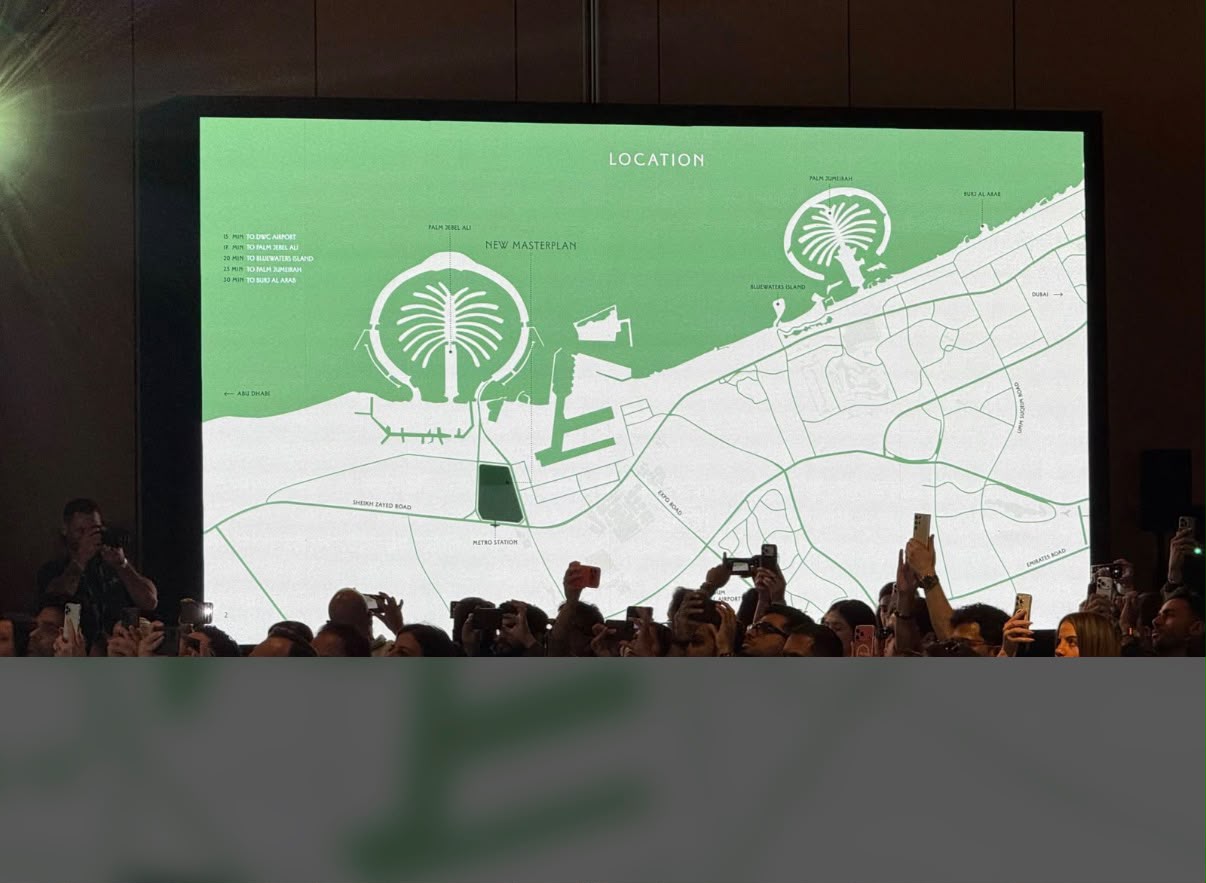
Palm Springs by Nakheel is located in Hessyan First, Jebel Ali, on Dubai's mainland near Palm Jebel Ali. Its position connects the development with two important parts of Dubai's growth story: the expanding waterfront district and the southern economic corridor.
The location also offers access to Sheikh Zayed Road (E11), Jebel Ali and Dubai South. Further south, Al Maktoum International Airport is undergoing a major expansion. These developments make location an important part of the Palm Springs property story.
Major Development on the Neighbouring Coast
Palm Springs is positioned on the mainland, opposite the wider Palm Jebel Ali development. This gives it a different setting from homes located on the island itself.
Palm Jebel Ali is planned across seven islands and 16 fronds. The master plan includes more than 90 km of beachfront. Its development is expected to add new homes, hotels, leisure facilities and coastal infrastructure to Jebel Ali.
For Palm Springs, the main point is proximity. The development sits near a large waterfront project while retaining a mainland address. This may appeal to residents who want access to the coastal district without living on the island.
Large waterfront projects can influence demand in nearby residential areas. Palm Jebel Ali is expected to create new activity across hospitality, retail, leisure and residential sectors.
This could increase interest in surrounding mainland communities. Some residents may prefer established road connections and access to Jebel Ali over living within a large island development.
Palm Springs may benefit from this wider demand. However, the effect on property prices will depend on the pace of construction, local facilities and the supply of competing homes. The key factor is the growth of the wider area, rather than proximity alone.
Sheikh Zayed Road and Access to Dubai's Employment Centres
Sheikh Zayed Road (E11) is one of Dubai's main transport routes. Its connection with the Jebel Ali area supports travel towards several major employment and business districts.
For Palm Springs, the road network is relevant to three main areas:
Jebel Ali Free Zone (JAFZA): A major centre for international trade, logistics and industrial activity.
Dubai Marina: An established residential and commercial district.
Central Dubai: Road access extends towards Downtown Dubai and the wider business districts.
Dubai South also forms part of the wider southern employment corridor. Its growing logistics and aviation activities may support demand for homes in nearby areas.
This road access gives Palm Springs a practical connection to different employment centres. Actual travel times will depend on traffic and the final road access to the community.
Metro access remains an important factor in Dubai's residential market. However, the existing network and future proposals need to be considered separately.
The Dubai Metro Red Line serves parts of Sheikh Zayed Road and extends towards Jebel Ali. Residents in Hessyan First would still need road transport to reach the relevant stations.
The Blue Line is a separate 30 km project with 14 stations. It is scheduled for completion in 2029 and will serve areas including Dubai Creek Harbour, International City and Dubai Silicon Oasis.
The approved Blue Line route does not include Palm Springs or Hessyan First. A Metro station directly serving the development has not been confirmed by the RTA.
For now, road access is the established transport advantage. Future public transport improvements may add value if they extend into the area.
The Next Phase of Southern Dubai
Al Maktoum International Airport is a major part of Dubai's southern development plans.
In April 2024, Dubai approved a new AED128 billion airport expansion. At full development, the airport is planned to handle up to 260 million passengers and 12 million tonnes of cargo each year.
The project is expected to strengthen Dubai South as an aviation and logistics centre. It will also support activity across transport, hospitality, trade and related industries.
This expansion could create demand for housing from airport employees, logistics professionals and businesses operating in the surrounding region.
Palm Springs is positioned within the wider Jebel Ali corridor. Its location may appeal to people seeking mainland housing with access to southern employment centres.
However, airport growth alone does not determine residential performance. Road access, local services and the delivery of nearby communities will also shape demand.
Dubai's 2040 Urban Master Plan provides a long-term framework for housing, transport and urban development. It aims to improve public spaces, expand green areas and bring homes closer to essential services.
The wider southern region also has an important economic role. Jebel Ali Port, JAFZA, Dubai South and Al Maktoum International Airport support trade, logistics and aviation.
These activities create a different demand base from established residential districts such as Dubai Marina and Downtown Dubai.
Palm Springs sits near this wider economic corridor and the planned Palm Jebel Ali waterfront destination. This gives the development exposure to two sources of future activity: coastal development and employment growth.
The strength of this location will depend on how these projects progress and how quickly supporting infrastructure reaches nearby residential areas.
What Makes Palm Springs' Location Relevant?
Palm Springs by Nakheel has three main location factors. Its position near Palm Jebel Ali links it to a major waterfront development. Access to Sheikh Zayed Road connects it with established business and residential districts. Its position within the Jebel Ali corridor also brings it close to the wider growth around Dubai South and Al Maktoum International Airport.
These factors provide a basis for assessing the development's location. The next stage of growth will depend on infrastructure delivery, employment activity and the quality of nearby facilities.
For property investors, the main consideration is how these developments translate into actual residential demand over time.